The FabIndia Jashn-e-Riwaaz controversy stands as a stark reminder that in India's increasingly polarized linguistic landscape, even word choice carries profound political weight. What began as a seemingly innocent festive marketing campaign quickly spiraled into a nationwide debate about cultural identity and linguistic imposition.
What Was the FabIndia Jashn-e-Riwaaz Campaign?
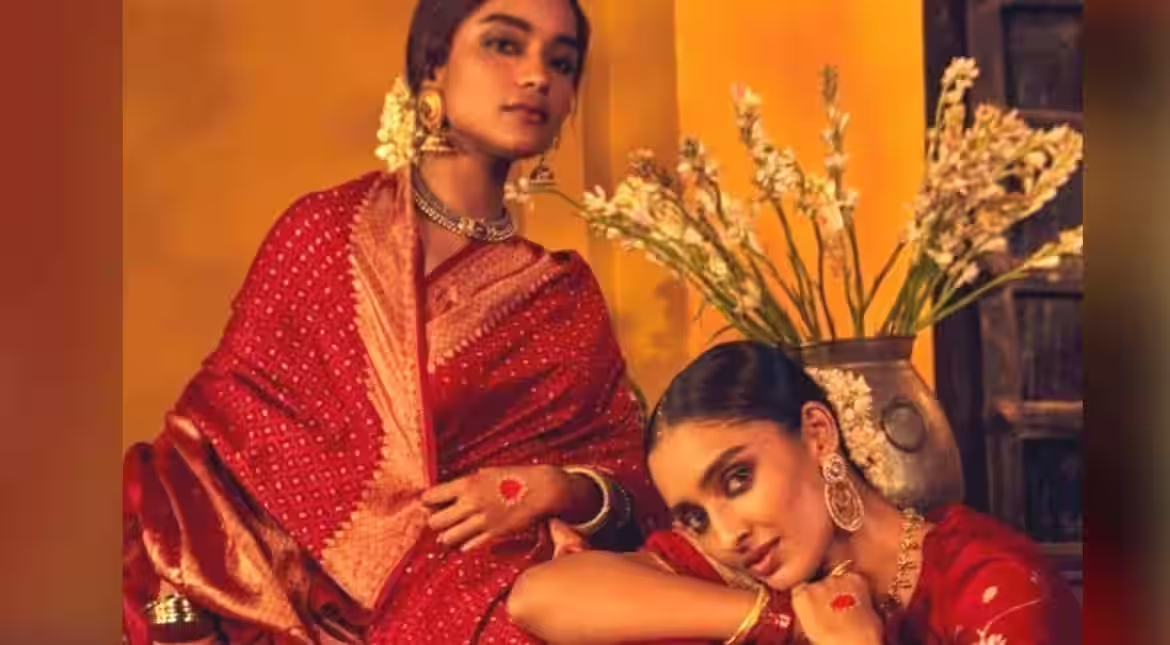
In October 2021, just before the Diwali festive season, FabIndia—a premium Indian ethnic wear brand known for promoting traditional crafts and textiles—launched its festive collection under the banner "Jashn-e-Riwaaz." The campaign featured models in traditional attire with the Urdu phrase prominently displayed.
The Creative Concept Behind the Ad
The campaign was designed to showcase FabIndia's Diwali collection, featuring traditional Indian wear for the festive season. The creative team chose "Jashn-e-Riwaaz" (Celebration of Traditions) as the campaign tagline, apparently intending to evoke the syncretic cultural heritage that FabIndia has long celebrated.
The collection featured sarees, kurtas, and other ethnic wear in festive colors, marketed as perfect attire for Diwali celebrations. The photography and styling emphasized traditional Indian aesthetics with a contemporary twist.
The Campaign's Strategic Intent
From FabIndia's perspective, the campaign aimed to:
- Position the brand as celebrating India's pluralistic cultural heritage
- Create an emotional connection through evocative Urdu poetry-style language
- Differentiate from competitors using more generic festive messaging
- Appeal to cosmopolitan urban consumers appreciative of linguistic diversity
"The creative team failed to anticipate how linguistic choices have become politically charged in contemporary India. This represents a classic SR-05 (Linguistic Identity / Cultural Ownership) mismatch where seemingly poetic language triggered identity-based resistance."
Why Did the FabIndia Ad Spark Such Intense Backlash?
The FabIndia Jashn-e-Riwaaz controversy cannot be understood without examining the broader political and social context of language politics in India. The backlash emerged from multiple intersecting sensitivities.
The Diwali-Urdu Disconnect
Critics immediately pointed out what they saw as a fundamental misalignment: using an Urdu phrase to market products for Diwali, a Hindu festival. The objection wasn't merely aesthetic—it was rooted in a political narrative that positions Urdu as a 'Muslim language' and Hindi/Sanskrit as 'Hindu languages.'
Opponents argued that if FabIndia was marketing for Diwali, they should use Hindi terms like "Tyohar" (festival) or Sanskrit-derived terminology rather than Persian/Urdu phrases. The use of "Jashn-e-Riwaaz" was framed as deliberate cultural erasure.
The 'Urdu Imposition' Narrative
The controversy tapped into a growing political narrative about "Urdu imposition" in Indian public life. Right-wing commentators and social media influencers framed the campaign as part of a broader pattern where Hindu festivals and traditions were being stripped of their cultural specificity.
Hashtags like #BoycottFabIndia and #FabIndiaAntiHindu began trending within hours, garnering millions of impressions and calls for economic retaliation against the brand.
The Historical Context
To understand the intensity of the backlash, one must recognize that language politics in India has deep historical roots:
- The Hindi-Urdu controversy dates back to colonial and partition-era politics
- Urdu became associated with Muslim identity in post-independence India
- Hindi promotion became linked to Hindu nationalist movements
- Festivals like Diwali have become symbolic battlegrounds for cultural ownership
FabIndia's campaign inadvertently walked into this minefield without apparent awareness of the political implications.
The Immediate Fallout: Campaign Withdrawal
Within days of the campaign launch, FabIndia faced an escalating crisis:
- Social media exploded with criticism and boycott calls
- Political figures and influencers amplified the controversy
- News channels covered the backlash extensively
- Competitors watched carefully to avoid similar mistakes
FabIndia's Response
FabIndia responded swiftly to contain the damage:
- The "Jashn-e-Riwaaz" phrase was removed from all marketing materials within 72 hours
- The campaign continued with generic festive messaging
- The company issued a statement emphasizing respect for all traditions
- No direct apology was issued, but the withdrawal signaled acknowledgment
"FabIndia is a brand that respects all religions and traditions. Our festive collection 'Jashn-e-Riwaaz' was meant to celebrate the traditions and rituals of Indian festivals. We would like to clarify that the phrase simply means 'celebration of traditions.'"
ASCI Guidelines and Regulatory Perspective
While the FabIndia campaign was not banned by ASCI, the controversy highlighted important considerations under ASCI Chapter II regarding respect for cultural and religious sentiments.
Relevant ASCI Code Sections
- Clause 1: Advertisements shall not offend decency and propriety
- Clause 2: Advertisements shall not deride any race, caste, color, creed, or nationality
- Clause 6: Advertisements shall not exploit religious sentiments
The controversy raised questions about whether using certain languages for specific religious festivals could be considered offensive to cultural sensibilities under a conservative interpretation of these guidelines.
Financial and Reputational Impact
The FabIndia controversy had significant business implications during the crucial festive season:
| Impact Area | Estimated Effect |
|---|---|
| Campaign Material Costs | Complete redesign required |
| Social Media Sentiment | 65% negative mentions |
| Diwali Season Sales | Estimated 8-12% impact |
| Brand Perception | Long-term repositioning needed |
Critical Brand Safety Lessons from the FabIndia Crisis
The FabIndia Jashn-e-Riwaaz controversy offers vital lessons for brand managers, copywriters, and creative directors working in India's complex linguistic environment:
1. Language is Political
In contemporary India, language choices carry political weight that transcends simple communication. Words aren't neutral—they're markers of identity, history, and political affiliation. Brand managers must understand the linguistic politics of their target markets.
2. Religious Festivals Are Sensitive Territory
Major religious festivals like Diwali, Eid, and Christmas have become sites of cultural contestation. Marketing campaigns for these occasions face heightened scrutiny and must navigate carefully between celebration and appropriation.
3. Syncretism Can Backfire
While India's syncretic cultural heritage is genuine, invoking it in marketing can trigger backlash from those who view such messaging as undermining distinct religious identities. What feels inclusive to some feels erasing to others.
4. Test with Politically Diverse Groups
Standard focus groups may not capture politically sensitive reactions. Campaigns should be tested with audiences across the political and cultural spectrum to identify potential flashpoints.
5. Monitor Linguistic Politics
The language politics landscape shifts rapidly. Terms that were acceptable yesterday may become controversial today. Brands need monitoring systems to track evolving sensitivities.
How BrandCheck Pro Prevents Such Crises
The FabIndia Jashn-e-Riwaaz controversy demonstrates why linguistic risk assessment is crucial for festive marketing. BrandCheck Pro's AI-powered analysis evaluates copy across multiple risk dimensions:
- Linguistic Identity (35% weight): Flags language choices that may trigger identity-based reactions
- Religious Context (30% weight): Identifies potentially mismatched language for religious occasions
- Political Neutrality (20% weight): Detects content that aligns with polarizing narratives
- Cultural Appropriation Risk (15% weight): Flags potential appropriation concerns
Ready to Protect Your Brand?
Don't let linguistic choices derail your festive campaigns. Analyze your copy for cultural and religious sensitivities before publication.
Analyze Your Copy NowFrequently Asked Questions About the FabIndia Controversy
Why was the FabIndia Jashn-e-Riwaaz campaign controversial?
What does 'Jashn-e-Riwaaz' mean?
Was the FabIndia campaign banned by ASCI?
What lessons can brands learn from the FabIndia controversy?
How can brands navigate linguistic sensitivities in festive marketing?
Related Case Studies
Explore other advertising controversies and brand crisis examples from India:
- Tanishq Ekatvam Controversy: Inter-Faith Advertising Backlash
- Zomato Kachra Campaign: Caste Sensitivity in Creative Metaphors
- Manyavar Kanyamaan: Challenging Hindu Wedding Traditions
- Layer's Shot Ad Ban: Regulatory Action on Indecent Content
Conclusion: Navigating India's Linguistic Minefield
The FabIndia Jashn-e-Riwaaz controversy serves as a crucial lesson that language in India is never just about communication—it's about identity, politics, and belonging. What the creative team saw as poetic celebration, critics viewed as cultural erasure.
For brand managers, the takeaway is clear: linguistic choices must be made with full awareness of their political implications. In an era where every word can be scrutinized for hidden agendas, brands need sophisticated cultural intelligence to navigate India's complex linguistic landscape.
Tools like BrandCheck Pro provide this intelligence—analyzing copy not just for literal meaning, but for political and cultural resonance that could trigger backlash.