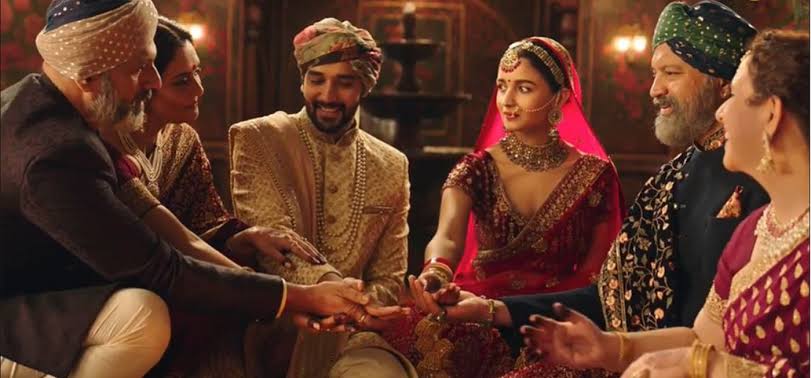
The Manyavar Kanyamaan campaign represents a fascinating case study in how brands attempting progressive social messaging can find themselves caught between competing ideological forces. By challenging one of Hinduism's most sacred wedding rituals, Manyavar sparked a debate that transcended typical advertising controversies.
What Was the Manyavar Kanyamaan Campaign?
In 2022, Manyavar—a leading Indian ethnic and wedding wear brand—launched a campaign that directly challenged the traditional Hindu wedding ritual of "Kanyadaan" (giving away the daughter). The campaign proposed replacing it with "Kanyamaan" (honoring the daughter).
The Creative Concept Behind the Ad
The advertisement featured a bride questioning the Kanyadaan ritual, asking why she should be "given away" like property when she's capable of making her own choices. The campaign argued that "Kanyamaan"—honoring the daughter rather than giving her away—better reflects modern values while maintaining the sanctity of the wedding ceremony.
The narrative positioned the change not as rejection of tradition, but as evolution—adapting ancient practices to contemporary understandings of gender equality. The visual storytelling emphasized the bride's agency and questioned patriarchal assumptions embedded in wedding customs.
The Campaign's Strategic Intent
From Manyavar's perspective, the campaign aimed to:
- Position the brand as progressive and aligned with modern values
- Appeal to urban, educated consumers concerned about gender equality
- Differentiate from competitors through purpose-driven marketing
- Tap into growing conversations about women's agency in Indian society
"The creative team attempted a progressive intervention in religious tradition without fully accounting for how such challenges activate both conservative defenders of tradition and progressive critics who view corporate feminism as performative. This represents an SR-06 (Sacred Ritual / Progressive Challenge) vulnerability."
Why Did the Manyavar Ad Spark Such Intense Debate?
Unlike typical brand crisis examples in India that face unified opposition, the Manyavar Kanyamaan controversy drew criticism from multiple, often opposing, directions. Understanding these competing critiques is essential for brand managers.
The Traditionalist Backlash
Conservative critics argued that:
- Kanyadaan is one of Hinduism's most sacred duties (mahadaan), not a property transaction
- The ritual's spiritual significance transcends literal interpretation
- Commercial brands shouldn't be reforming religious practices
- The campaign represented cultural appropriation by a clothing company
- Progressive messaging was attacking Hindu traditions while respecting others
Social media saw hashtags like #BoycottManyavar and #ManyavarAntiHindu trending, with critics calling for economic retaliation against the brand.
The Progressive Critique
Perhaps more surprisingly, the campaign also faced criticism from feminist and progressive voices who argued that:
- The campaign was performative "woke-washing" without real structural change
- Manyavar didn't address actual gender inequality in its own operations
- "Kanyamaan" still centers the daughter in relation to her father, not her own autonomy
- The brand was commodifying feminism to sell wedding clothes
- Real change requires challenging marriage itself, not just renaming rituals
The Credibility Question
A recurring theme in the criticism questioned whether a wedding wear brand—whose business model depends on elaborate traditional weddings—had credibility to challenge those very traditions. Critics noted the contradiction of profiting from wedding celebrations while critiquing their ritual foundations.
The Broader Context: Gender and Wedding Commerce
The Manyavar controversy occurred against a backdrop of evolving gender dynamics in Indian weddings:
- Growing conversations about dowry and wedding expenses
- Rising age of marriage and women's educational attainment
- Increased legal recognition of marital rights
- Social media amplifying both progressive and traditional voices
- The wedding industry's massive economic significance in India
Manyavar's campaign tapped into genuine social tensions but may have underestimated the complexity of navigating these waters as a commercial brand.
ASCI Guidelines and Regulatory Perspective
The Manyavar Kanyamaan campaign was not banned by ASCI, reflecting the regulator's general reluctance to intervene in socially-charged but non-offensive advertising. However, the controversy highlighted important considerations:
Relevant ASCI Code Sections
- Clause 1: Advertisements shall not offend decency and propriety
- Clause 2: Advertisements shall not deride any race, caste, color, creed, or nationality
- Clause 6: Advertisements shall not exploit religious sentiments
The question of whether challenging a religious ritual constitutes "deriding" a creed or "exploiting" religious sentiment remains ambiguous in ASCI's framework, creating uncertainty for brands considering similar campaigns.
Financial and Reputational Impact
The Manyavar controversy had mixed business implications:
| Impact Area | Estimated Effect |
|---|---|
| Social Media Sentiment | Divided (55% negative, 45% positive) |
| Sales Impact | Minimal short-term effect |
| Brand Perception | Polarized along ideological lines |
| Media Coverage | Extensive, mostly neutral |
Unlike controversies that unified opposition, Manyavar's polarized response meant that while some customers were alienated, others were attracted to the brand's progressive positioning.
Critical Brand Safety Lessons from the Manyavar Crisis
The Manyavar Kanyamaan controversy offers crucial insights for brand managers, copywriters, and creative directors considering socially-charged messaging:
1. Progressive Campaigns Face Multi-Directional Risk
Unlike traditional controversies that generate unified opposition, progressive social messaging can trigger backlash from multiple, often contradictory, directions. Brands must be prepared to defend their positions against both conservative and progressive critics.
2. Credibility is Context-Dependent
A wedding wear brand challenging wedding rituals faces inherent credibility questions. Brands must assess whether they have earned the right to speak on particular social issues through their actions, not just their advertising.
3. Sacred Rituals Are Defended Fiercely
Religious and cultural rituals, even those with patriarchal elements, are often defended by communities as core identity markers. Challenging them requires understanding their significance beyond surface interpretations.
4. Surface-Level Changes May Satisfy No One
Manyavar's "Kanyamaan" proposal attempted to split the difference—keeping the ritual structure while changing its meaning. This approach satisfied neither traditionalists defending Kanyadaan nor progressives seeking deeper structural change.
5. Expect Scrutiny of Internal Practices
When brands take public stands on social issues, critics will inevitably examine whether internal practices align with external messaging. Manyavar faced questions about gender representation in its own organization and supply chain.
How BrandCheck Pro Prevents Such Crises
The Manyavar Kanyamaan controversy demonstrates why multi-dimensional risk assessment is essential for socially-charged campaigns. BrandCheck Pro's AI-powered analysis evaluates copy across multiple risk dimensions:
- Sacred Ritual Sensitivity (30% weight): Flags content challenging religious or cultural ceremonies
- Progressive Messaging Risk (25% weight): Identifies potential performative activism pitfalls
- Multi-Directional Backlash (25% weight): Assesses potential criticism from opposing ideological positions
- Brand Credibility Alignment (20% weight): Evaluates consistency between message and brand category
Ready to Protect Your Brand?
Don't let social messaging backfire. Analyze your copy for ritual sensitivity, progressive credibility, and multi-directional backlash risk before publication.
Analyze Your Copy NowFrequently Asked Questions About the Manyavar Controversy
Why was the Manyavar Kanyamaan campaign controversial?
What is Kanyadaan and why did Manyavar want to change it?
Was the Manyavar Kanyamaan ad banned by ASCI?
What lessons can brands learn from the Manyavar Kanyamaan controversy?
How can brands navigate gender and tradition in wedding advertising?
Related Case Studies
Explore other advertising controversies and brand crisis examples from India:
- Tanishq Ekatvam Controversy: Inter-Faith Advertising Backlash
- Zomato Kachra Campaign: Caste Sensitivity in Creative Metaphors
- FabIndia Jashn-e-Riwaaz Controversy: When Language Becomes Political
- Layer's Shot Ad Ban: Regulatory Action on Indecent Content
Conclusion: Navigating the Minefield of Tradition and Progress
The Manyavar Kanyamaan controversy illustrates that in India's complex cultural landscape, even well-intentioned challenges to tradition can generate unpredictable reactions. Brands seeking to align themselves with progressive values must navigate carefully between genuinely advancing social change and appearing performative or culturally insensitive.
For brand managers, the key takeaway is clear: social messaging must be backed by genuine commitment and deep cultural understanding. Challenging sacred rituals requires more than clever copy—it demands acknowledgment of the genuine spiritual and cultural significance these practices hold for millions of people.
Tools like BrandCheck Pro help brands assess these risks before campaigns launch—analyzing not just what messaging might offend, but how it might be received across the full spectrum of ideological perspectives.